
Rijeka, the main port city for northern Croatia, used to be the Austro-Hungarian seaport known as Fiume, and is a stubbornly non-tourist city fabulously slagged off in almost every guidebook to Croatia ever written. It is a working port and working class metropolis by the sea - if you want beaches, go elsewhere. On the other hand, it is one of the most fascinating and unique destinations that nobody ever goes to on the Croatian coast. Rijeka isn't an easy visit: it doesn't expect people to stay, and accomodations are scarce and pricier than at resorts along the sea. Everything else - food, and the surprisingly lively night life scene - is far cheaper.

Who needs night life when you have street life. We caught a park festival featuring guys dressed up as clowns and animals while contestants dived into a deep pool full of sudsy water groping around to pick up bananas and win prizes. Surreal, yes, but in a 1960s Italian film kind of way. Rijeka is famous for its local rock scene: we saw the
Rijeka band Let 3 at the A38 a month ago and they just about blew even the most jaded rock snobs away when they finally stripped for their final number - played naked with dog muzzles covering their family jewels and with roses stuck in their behinds.

Controlled by the Hapsburgs since 1466, Rijeka came under Hungarian control in 1870. Although the population was primarily Croatian and Italian, a prosperous Hungarian middle class set roots down here in the years before World War 1. In 1912 the future Hungarian communist politician and party leader
János Kádár was born in then Rijeka as Giovanni Czermanik. Former New Yiork Mayor Fiorello LaGuardia worked at the U.S. consulate here from 1904 to 1906, allegedly playing for the Rijeka football club while here.

Hungarians tend to get nostalgic about the "loss of Fiume" - the only sea port they ever had control of, but after World War I things really started to go pear-shaped. After a brief Italian occupation, in November 1918 an international force of French, British and American troops occupied the city. Italy claimed Rijeka on the fact that Italians were the largest single nationality within the city. Croats made up most of the remainder and were also a majority in the surrounding area, including the neighbouring town of Sušak. On September 10, 1919, the Austro-Hungarian monarchy was dissolved.

Two days later a force of Italian nationalist irregulars led by the writer Gabriele d'Annunzio seized control of the city. Eventually Italy and Yugoslavia concluded the Treaty of Rapallo, under which Rijeka/Fiume was to be an independent state, the
Free State of Fiume. In 1924, however, Rijeka was annexed by the Italian Fascists to Italy itself, and was only ceded to Yudoslavia in 1947. (Given that I am going to be doing a gig in Gdansk/Sopot, Poland on July 22 with Di Nayes, this makes two former Free Port States I will be visiting this summer. I feel like
I ought to annex some territory or something.) Another result is that while Istria feels like a lost bit of the Italian countryside, Rijeka/Fiume feels like nothing so much as a funky, down at the heels Italian port city that just happens to speak Croatian.

Rijeka is where you can really sense the meeting of Italian and Balkan cuisine. This isn't a tourist town, and we chose our dinner spot based on the "how many families are happily chowing down here" method of restaurant selection. And they were chowing down at a grill joint offering cevapcici and pljeskavica just next door to a tapas bar highly recommended by our associates at Time Out Travel Guides. The Tapas joint was deserted. The Cevap joint was packed. A difficult decision.
 Cevap
is the Balkan/Yugo version of the Turkish word "kebap" i.e., kebab. Essentially it is a mixture of beef and sometimes lamb (more beef in Croatia, more lamb in Bosnia and Macedonia) rolled into those tasty little skinless sausage patties we know in Turkish as
köfte. I discovered at home that I could not make these using ground beef bought at the butcher's (or in our case, Tesco) because the grind was too coarse. The trick is to pulverize the already ground beef into a paste using a meat tenderizing hammer (hammer the handful of meat inside a plastic bag so you don't paint the room in
explosive meat color) then season and form into thumbsize rolls. Smash the ground meat mixture into a dish-sized patty and the result is a pleskavica (or
pljeskavica as the call it in
je-kavian Croat) These may be served in a fluffy flat bread called
lepinje, which can very rarely be found in Hungary as
lepény.

Ignore the recent
cevap recipe given at Chew.hu which includes pork - pork doesn't belong anywhere near a cevap or pleskavica. For one thing, it would fall apart (ground pork needs a binder or a sausage casing to form a stable patty.) For another thing... it would taste like a Tesco cevap, and we wouldn't want that. (Or, to paraphrase Frank Zappa
"Is that a real cevap or is that a Tesco cevap?") If you are hankering for a cevap or pleskavica in Budapest you will find them either at the
Kafana serb resturant or at the
Jelen Biszto behind the Corvin Department Store at Blaha Lujza ter in Pest.
Kafana is more elegant, but the Jelen accurately replicates the
lepinje sandwich style. (The orange stuff seen below is
ajvar - a mild red pepper paste condiment.)

In terms of interest,
pleskavica and
cevapcici are among the two items that lead the pack in leading readers to this blog from Google.
Welcome to our blog, hungry Balkanoid appetites of the Internets! (The most common searches leading to
Dumneazu are to the "
Yidn Mit Pixels" page about B&H photo in NY, the
Fröhlich Cukrászda post,
the Kádár Étkezde post, with many, many Romanians visiting the posts on
Vioara cu Goarne - possibly because those posts have earned themselves their own Romanian Wikipedia entry. Obviously, the world is hungrier for more info about weird bastard trumpet fiddles than we knew about.

One final word: Croatia is still not conforming to the EU rules regarding modern information signs. As can be seen from the sign above (from the beach at Verdula in Pula) you are heartily encouraged to abandon your crippled family members by rolling them downhill into the sea. And this sign (downtown Novigrad) can be interpreted in several ways:
1.
Policemen Not Allowed to Play in Picnic Areas.2.
Free Wifi for Members of Marching Bands!3.
Do Not Attempt to Fly the Cylon Base Star by Yourself!
We would also like take the time to aknowledge the ugly little shitbird who served as our Hungarian State Railway conductor on the couchette car back to Budapest from Rijeka. As our train was to leave at 20 minutes after midnight on Sunday, Fumie asked the conductor about our seats only to be told that the ticket was for Sunday night, not Saturday night, and no amount of discussion would get him to admit that 00.20 AM actually was on a Sunday. He was pretending not to understand Fumie's (quite fluent) Hungarian when I strolled up. "But you are not on the reservation list!" After calmly conversing with this transparently corrupt retard (
my sincere apologies to all the honest and genuinely hard working retards out there...but one bad apple spoils it for everyone) I asked "So how do we solve this problem?" "
Well, it can be solved... with a tenner!" 10,000 Forints... about 40 Euros, this after we paid 9 Euros for our valid couchette and knowing that a couchette bed costs only 14 Euros without reservations. I said calmly "
rendben" - fine. He led us onto the train and proceeded to warn us about all the dangers - thieves mostly - that awaited us in Zagreb station. In twenty years of riding every cattle car in the Balkans the only actual thieves I ever encountered on a train were within ten kilometers of Budapest.

Once on the train I had no intention of coughing up the bribe to this greedy little ogre, but faced by two speakers of Hungarian instead of one he lost face, and soon the little MAV geek popped his misshapened head into the cabin to announce "Oh! I found you on the list of reservations! Must have been looking at the older list!" So no, we will not bother reporting your pathetic attempt at extortion to the already pathetically corrupt MAV management in Hungary. They'll all be on strike in a week or so anyway. Nobody knows why. Nobody cares, either.
 In Hungary, the midsummer doldrums when there is absolutely no news to report is called uborka szezon, literally "cucumber season" because there is nothing at all happening and the newspapers actually run stories about how "the cucumbers are ripening." Although, this being Hungary, the stories tend to be about angry farmers dumping cucumbers in front of the Parliament because they all ripen at the same time and the prices fall and the farmers don't like that, except that Parliament is not in session until September so the farmers have already decided to complain about the apple season instead and dump apples next month, because at least the ministers will be back in their seats then and they can get some desultory TV coverage. Hungary is a simple place with simple needs for simple people. Among my simple needs are pickles. Not the usual dill pickles which you get in Hungary. I specifically need New York Jewish style garlic half-sour pickles, and rather than complain about the lack of decent picklage in Budapest I long ago began experimenting with making my own New York pickles.
 The model, yea, the holy grail of the New York half-sour are the pickles at Katz's Delicatessen on Houston Street in Manhatten. Readers of this blog already know my attachment to Katz's, the only place in the world where I would not think of complaining about paying $15 for a pastrami sandwich. The sandwich is really only a vehicle for the mustard and pickle. And the New York half-sour garlic pickle is the perfect food for the summer, occupying that vaguely defined space between a raw veg and a salad. At Katz's the tradition is that you should tip the counterman a dollar - he'll cut your meat more generously, but more important, he'll dump a half kilo of mixed pickles on a plate for you. It pays to tip your man at Katz's.
 Part of the allure of Katz's is the pickles - you can get full sour or half sour, which are the bright green fresh looking pickles seen above next to an example of the world's best pastrami sandwich. Neccesity is the Mother of invention, they say, so I have learned to make my own. Luckily, during cucumber season, you can easily find the ingredients at any Hungarian vegetable stand.
 Kirby cukes and dill. I don't always like to use dill, but this time I gave it a shot. The results were fine, but my kitchen now smells like Finland, a land where dill and salt are the only flavors I can remember. Wash the cukes well and prepare a brine of coarse salt (it is important not to use fine iodized table salt - which results in a slimey, soft pickle) water and spices. How much salt is tricky to explain - I just taste the brine until it aproximates the saltiness of regular pickle juice that you get from store bought pickles, otherwise I tend to over salt the brine. I add whole black pepper, mustard seed, coriander seed, and a hot chile pepper and then pack the cucumbers in a large jar with about a dozen cloves of crushed garlic.
 The sectret to Hungarian kovaszos uborka is to stick a slice of crusty bread on top of the brine to introduce yeast into the mix. I usually don't bother, but it speeds up the process and the New York style half sour cure takes only two days this way. You can use dill or not - I get annoyed at the smell of dill lingering in the kitchen after a few days, so I usually leave it out. It's the garlic aroma that I am really after anyway.
 The finished product. Not quite as crispy as a Katz's pickle (which I believe all come from Guss' Pickles on Essex Sreet anyway) but close enough. If I could, I would travel to my home town for the New York Pickle Day festival, at the New York Food Museum on Sunday, September 14, 2008. But if you need tips, the Museum had a page of pickle making tips.


 Growing up in the New York area, Polish kielbasa was one of the fondest memories of my mispent adolescence. Since we couldn't get Hungarian kolbasz very easily (short of a trip to the Hungarian butchers in the Yorkville section of Manhatten) my Hungarian Mom used to make do with Polish sausage. Polish kielbasa was also the lunch of choice when I worked on a sanitation truck crew in Hackensack, New Jersey. My garbage crew (six muscular black guys who moonlighted as the Gospel choir of their church and who used to practice singing while unloading huge cans of trash) would often stop on our way to the dump at a kielbasa shack in Garfield, NJ (population 50% Polish, 50% Hungarian) and demolish a few dozen grilled links before nine AM on any given morning.
 Of course there is more to Polish cuisine than truck stop chow. in Krakow, Fumie led me to the Restaurant Polskie Jadlo, which featured the Golonka Festiwal, a celebration of pig's knuckle in all its greasy, gelatinous glory.
 Golonka is roast pig knuckle, and it features on allmost every Polish menu. At the Jadlo this little joint of piggy goodness was offered in a dozen ways - we chose to split a big one in garlic and plum sauce, with a huge dollop of horseradish and mustard on the side. Eating these may well be illegal in the state of California, which is why we eat them in Krakow. And mind you, this is "light summer food" in Poland.
 Since we are all going to die anyway, we might as well know why. If the golonka isn't "mortality on a plate" enough for you, the starters definately were: pork lard mixed with pork cracklings and herbs, spread on thick slabs of Polish rye bread. You begin to notice a theme here, and that theme definately doesn't have anything to do with being kosher. Yes, I know that I will have a lot to answer for when I get to the Great Kosher Meal Plan in the Sky. But, doesn't God love a sinner? Or a fool. I'm not sure which.
 But fine cuisine alone is not what drew me to Krakow. We had a gig at the


 After the Weimar week, we tossed Jake and some of his french Klezmer friends into our mini bus for the ride back to Hungary, where we had been asked to play and teach workshops at the MAROM
 I would have avoided the mess in
 I managed to do better eating at the small village bar in Monostorapati, where a decent serving of mutton stew with tarhonya (little lentil-sized pasta) ran only Ft 800 (EU 3.25) and the froccs was fresh and local. This is real Veszprem county food - you never get good tough sheep meat in paprika sauce in Budapest, and my roots are from Veszprem, so I was in mutton heaven.
 I couldn't really deal with the nightly music offerings down on the soccer field, which comprised mainly of Israeli rap bands which invariably featured Heroic Hebes in dreadlocks whacking away artlessly on djembe drums and darabukkas. It was seriously painful and tedious. Instead, I wound up befriending a family of the local Beas (
 The Beas are Gypsy in origin, but lost the use of the Romani language several hundred years ago while enslaved/enserfed by the Romanian nobility and used to work in mines (hence the name: Baias, or miner in Romanian.) The Beas are losing their language in Hungary, but these still spoke Beas, an older dialect of Romanian with admixtures of Serbian and Hungarian. When I was able to answer them in my own pidgin pan-balkanoid way, they were astonished. "You speak tsiganesht!" No, I had spoken Romanian, not Romani to them. But these were farm assistants, not linguists. On the other hand, the one Romani word they did recognize was useful a bit later when the wine flowed a bit to freely. "Patchiv!" Respect. Never met a Gypsy who didn't have a deep sense of respect, at least when expressed in their own language.

 In Palatka, a small village in the Mezőség (or Câmpia Transilvaniei) twenty kilometers east of Cluj, the Kodoban, Radak, and Macsingo families have provided the music for the mixed ethnic populations of the Mezőség region for genersations. Palatka's virtual isolation has allowed it to preserve a particularly rich dance tradtion and an archaic style of fiddle band music, rich in ornamentation, lop-sided rythyms, and a dissonant sense of harmonizing modal melodies against major chords played on the three stringed, flat bridged viola known in Transylvania as the kontra.
 Of course, there was always a question about "which Gypsy dance" to which the answer is there is no single Roma dance tradition. The dances from Transylvania, however, are one of the few that are done to an instrumental music played by Roma for Roma, known as ţiganeşti in Romanian and cigány tanc in Hungarian, or basically, romani khelipe in Romani.
 One of the main features of Romani dance, in contrast to the non-Gypsy gadjo population, is that the Roma maintain a much stricter separation and definition of gender roles between men and women. The Roma style of dance reflects this: men and women dance in couples but without touching or holding, for the most part. In the Mezőség a "dance cycle" begins with slow dances and can last over a half hour before ending with twenty minutes of fast csardas dances. The Gypsy dance cycles include some couple dances in which the couples are holding each other (such as the slow "lassu ciganytanc") but they then either skip or sit out the middle tempo dances until the final fast dances, during which the Roma men show off in a far more improvisiational manner than the non-Gypsy dancers.
 The middle tempo dances done by non-Gypsy peasants usually feature a lot of mixed couple figures that intertwine the dancers bodies - movements which are not considered proper by Romani attitudes towards gender interaction. It should be interesting to teach Roma dance to folk dancers - we are happy to teach women the men's steps and vice versa, but the dancers would never get a chance to use those figures in anyreal-life situation among Roma involving dance. It is a pretty strict rule in Roma society that gender roles are never reversed.
 Part of the seminar session at Weimar concerned the interaction of Gypsy and Jewish musicians in eastern Europe. Festival director Alan Bern brought lautar musicians Adam Stinga and Marin Bunea (and Marin Recean, clarinetist) from Chisinau, Moldova and our own Kalman Balogh and Csaba Novak from Budapest for the Roma music project. Kalman brought along several bottles of top shelf Hungarian fruit brandy to liven things up. Look! Why is everybody smiling?
 My Man in Austin,
 Another old friend from Budapest at Weimar was Claude Cahn, previously of the
 Weimar, as you all know, is where the Germans learned to make money worthless. Nevertheless the town is as cute as a German city can be, and crawling with tourists. It is in East Germany, which means the food is almost as bad as Finnish food (which is pretty hard to compete with, so let's give our Ossie friends an A for effort!) and the service makes Hungarian waiters seem like busy bees. On average, one waits for well over an hour after ordering a meal to get served. During that hour I am usually regaled by Mark Rubin loudly threatening to crush the wait staff to death beneath his massive buttocks.
 Our accomodation, however, was great: the Hotel Leonardo in Weimar gets my custom whenever I head through town with a wallet stuffed impossibly full of Euros. And they do, in fact, make a room service cheeseburger that knocked my socks off. I didn't feel inspired to photograph much of the East German food I encountered. It was mostly brown, and looked like, well, brown stuff. This was probably the first time in my life that I ordered room service... heck, it wasn't even that expensive. And you can't get a good burger in Hungary at all. I salute you, Masterful Burger Chef of the Hotel Leonardo Weimar!


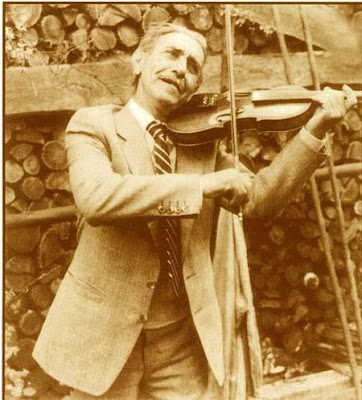 This year director Alan Bern has focused on the role of Jewish and Roma musicians as "the Others" in the history of European music, and Alan has asssembled a number of participants to talk about the history and culture of "music on the perimeters" of the main culture. Next week is the conference/seminar/film component of the summer program. Later Di Nayes will return to Weimar with Florin Kodoban from Palatka to do a concert and a week of dance workshops - playing for the Klezmer dance workshops in the morning, and Transylvanian "Ţiganeşti" Gypsy style dances in the afternoon. I'm looking forward to playing with Florin - I knew his late father, Márton, well and Puma and the boys in the band have been playing with the Palatka band on and off since the 1970s. Jake Shulmen-Ment is planning to be there from NYC. Jake has been turning into the prodigal ace of NY fiddlers who play both klezmer and Transylvanian... so this should be fun. I'm hoping to do a few very early Moldavian lautar songs from the early 1800s mixed up with some older Klezmer stuff.
 Jewish musicians have been interacting with Gypsy musicians for over three hundred years in East Europe. Music - at least popular and wedding music - has traditionally been performed by hereditary dynasties of musicians, whether 'klezmer" families of Jews, or "lautar" (or "bashaldar") familes of Roma. Over the years that I have been collecting Jewish instrumental music in East Europe, my main sources have been Gypsy musicians who had once played for Jews and who maintained a repetoire of Jewish dances. This is mainly because in a small town or village, the local non-Gypsy musicians can usually play the music of their own ethnic group, but were rarely called on as professionals to play the music of any other ethnic group. Sadly, that generation is almost gone... One of my best teachers and sources was Gheorghe "Ionnei" Covaci from the vilage of Ieud in Maramures. He passed on in 2002.


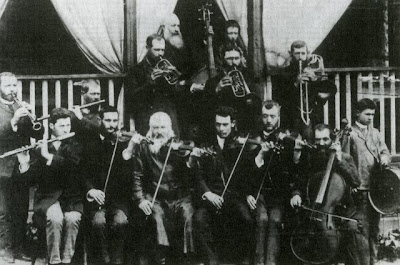 In the Austro-Hungarian regions and Moldavia, however, the tsekh system was weaker or non-existent. In these areas a Jewish band would often fill its ranks with extra musicians from the local Roma musician communities. Kid fiddlers were cheap. Maramures fiddler Cheorghe Covaci "Cioata" once told me that pre WWII Jewish band leaders used to pay him "with cake." His cousin, Rajna Covaci told me the same thing. (My own band wouldn't take well to that.) After the Holocaust, in many regions such as Karpatalja, certain Gypsy musicians became the preferred musicians for the Jewish community, as did the Fiddler Manyo Csernovec from Tjaciv, Ukraine, the father of the musicians in today's
 In the last couple of years many of the last generation of klezmer musicians who had learned their music as part of a Yiddish upbringing with ties to a fast vanishing "Old Country" have passed on. Paul Pincus, Howie Lees,
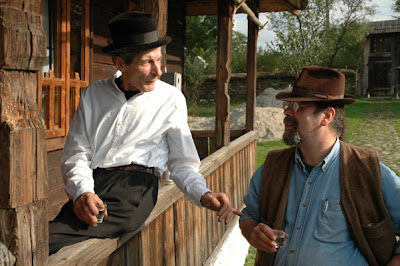 On my last trip collecting music in Maramures, in Romania, I was still able to find Gypsy musicians who knew a repetoire of local Jewish music. Besides Ionu (who locally goes by the nickname "Paganini") there was also Gheorghe Urecche ("The Ear") who learned his tunes from his father, who had been a cross-border smuggler in league with a Jewish musician remembered as "Benzine." Let that be a warning to those named Ben-Zion. Historical folk memory can be merciless.


