 My mother's mother and father, Margit Kasser and Ferenc Grósz. I never met either of them, although I have possesion of my Grandfather's wooden brandy flask from the first world war. My Grandfather died in 1932, my Grandmother in November 1956.
 My grandfather was a Hussar, specifically, a Hussar of the Hapsburg King and Emporer in the 19th Jász and Kun Hussar regiment. That's what it says on his ID card. The 19th Regiment was the last functioning military institution of the "barbarian hordes" in the middle ages - it was the right of the Turkish speaking Cumans and the Ossetian Jász to form their own regiments to protect Hungary before and after the Mongol invasions in the 13th century. By the 19th century, the Jász and Kun had assimilated into the "most Hungarian of Hungarians" but still maintained special land and military status in the Hapsburg Empire. My Grandfather - who was Jewish, not Cuman - was the provisioner/butcher of the regiment, and served in the Balkan and First World wars. He met my Grandmother in Bosnia, and moved her to Budapest, then serving in Transylvania around the Carpathians and in Moldavia during the First World War. After WWI the family moved to Veszprém, where my Grandfather worked as a butcher.
 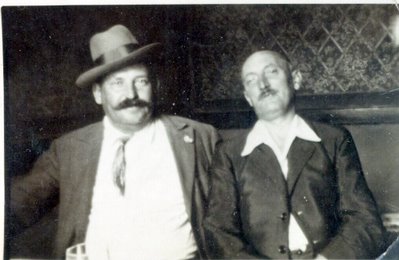 Grósz Ferenc was murdered in 1932, when my mother was four. It took a lot of investigating to get the whole story of my Grandfather's death, but let us at least say his death was revenged. It took about 15 years, but the bastard got his. Due to the vaguaries of Roman law, I can't exactly print how the bastard got his upcomance, but trust me, our boys took care of it. In our family, 15 years is a but a nanosecond when carrying a grudge. The legacy of my Grandparents led to the family joke in Veszprém, called the "Grósz pathology." Grósz women are strong and domineering. As my Aunt Etus said: "Grósz men like to drink, tell stories, sing songs, and have a good time."
  My Grandmotherwas born in Travnik, Bosznia, in 1896. She met my Grandfather sometime during the Balkan wars when his regiment was based in Bosnia. Parts of her family were named 'Kasser' and some 'Gaspar.' She spoke Serbian and Hungarian - like many Hapsburg Jews in Bosnia. During WWI one part of her family moved to Istanbul and became wealthy financial advisors to the last Sultan, Abdul Hamid. (It was pointed out to me - during a tour of Yildiz Saray in Istanbul last August - that being a financial advisor to the final, and most corrupt of Ottoman Sultans might not be something to brag about...) Her family was involved in the salt-hauling trade to Hungary. After 1923 they moved back to Budapest and started Budapest's only Turkish restaurant in Csepel, specializing in eggplant dishes. My Mom worked there for a while, and to this day my Mother hates the smell of eggplant.
 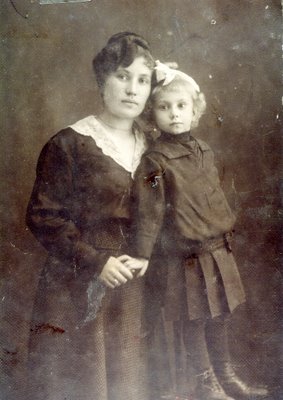 My Aunt Etus with my Grandmother around 1918. Etus passed away last year. Etus was fifteen years older than my Mother and essentially raised my mom. My mother is one tough cookie, but Etusnéni - even well into her very active 90's - always treated her as a little squirt who shouldn't talk back to her big sister. Below, my mom around 1933.
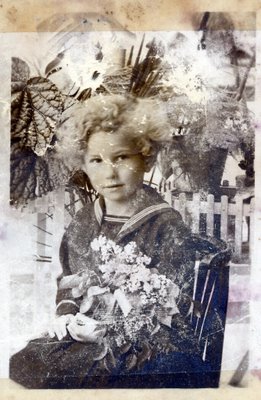 Living out in the country, the family were pretty completely assimilated Jews, who completely identified with being Hungarian. My mother, Margit Grósz, around 1938, in her favorite picture. Within a very short time, all of these happy memories would be overshadowed by the experience of the second World War in Hungary. The Grósz family was one of the few Hungarian Jewish families to survive intact - usually attributed to our history of ornery toughness, wit, and an uncanny ability to dissappear like chameleons into the mass of Hungarian peasants, but my mother became a refugee and eventually left for the US in 1948.
  And it all leads to the parking lot of Costco in Hackensack, NJ.


 The Best Pizza in the World. The smell hit us on entering. It hasn't changed in the last thirty years. Compared to other pizzas, this is the King of Tomato Sauce, obviously made with imported whole canned Italian tomatos. Crispy crust, just the right amount of cheese. Thick mushrooms. Cooked thick mushrooms. Raw mushrooms tossed on a pizza is a bad sign.
 We decided to check in at our old address on Coddington Avenue. This is the house where we grew up before moving out in late 1966. As you can see below, it has not changed much at all since 1958, when this photo was taken. The street is still populated by descendants of the families I grew up with. Italians, German, Irish, Greeks, and Latin Americans. Nobody moved away. This is the old Bronx - hard new York accents, people who rarely leave the borough. I offered to send a copy of some of my photos to the present owners of this house. They don't have email. That is really quite refreshing in these times. In the Bronx they don't use email.
  The east Bronx is one of the heaviest Italian neighborhoods in the city of New York, with a preponderance of southern Italians from Naples, Sicily, Calabria and Apuglia. Bob took us over to Arthur Avenue at 187th st to visit the last real "Little Italy" in New York. The Arthur Avenue neighborhood near Fordham University is one of the last undiscovered - read uncool - ethnic neighborhoods left in the city. You can buy fresh pasta, baccala, amazing breads, salamis and cured meats that are simply not available anywhere else in North America.
  Mr. Italian Meat, Chef Ron, with Italian meat. A supremely Italian Meat moment. These were taken less than 24 hours ago. We staggered out of there with a huge load of sausages, salamis, and fresh ravioli. They are all gone now. All gone! So sad. Have to go back and get more...
 My Grandmother, Betty Tzarevkan, was born in 1893, in Teleneshti, Moldavia, then part of Russian Bessarabia. Above is her father, who was a rabbi. My great-grandmother was the daughter of a rich textile merchant in Telenesti, and when the marriage was arranged for her to marry a rabbinical student, and not the man she really loved, she fell into a state of depression of almost catatonic severity. This was well before Oprah, y'all. My grandmother is on the left in the photo below.
  After the 1905 Kishinev (today: Chisinau, Moldova) pogrom, the family fled to Odessa, where they opened a kritchma, or pub. My Grandfather's family was living in Kishinev at the time of the second Kishinev pogrom. My Grandfather remembered that when the pogromchiks first attacked the Jewish ghetto, his brother - part of an early Jewish Defense League - went into the family attic and came out with guns. The Jewish defenders went on the roof and shot down onto the attacking Cossacks. They then fled Kishinev to Odessa. My grandfather actually met my grandmother sometime around 1908 at her father's pub in Odessa, but subsequently moved to Kiev and started a family. That wife abandoned him during the first World war. Or so we were told.
  My Grandfather, Morris Cohen, was born Moshe Onetskansky in 1890 in Kriuljany, Moldavia, across the river from modern Dubossary. A jeweler by trade, he served as an artillary soldier in the Russian Army in World War One, and was then arrested by the Bolshevik forces in 1919 on suspicion of having hidden jewels from the revolution. While arrested and being marched to jail, he convinced his Russian captors that they needed a drink, got them drunk at an inn, and escaped through the bathroom window. He crossed the Dnyester river on a sled made by freezing his overcoat, only to be arrested as a Bolshevik spy on the Romanian side of the river (Romania had gotten possesion of Bessarabia after WWI). Condemned to be shot, he was saved when the Police Chief turned out to be his brother (he had 11 Brothers...)
  My Grandfather met my Grandmother in Stefanesti, where she was in prison for smuggling cigarettes (family tradition has it that she took the rap for her sister. Family tradition also had it that she was imprisoned for "illegally peeling potatoes." So much for family tradition.) She recognized my grandfather walking down the street, and since a married woman couldn't be kept in jail, convinced him to marry her. They moved to Iasi and worked to make the money to get to Hamburg, where they spent a year working to get the money for the passage to New York. When they reached Ellis Island, the immigration officials couldn't spell "Onetskansky" so they asked my Grandfather for his "Jewish" name: and so we all became Cohen.
  They arrived in New York in 1925. Like many immigrant Jews, they immediately joined a landsmannshaft, or burial society, which kept a cemetery reserved for any Jew from their region, but was, essentially, a social club and insurance association. Above, Betty and Morris Cohen , second row right, next to the mirror, at a meeting of the Orgeyver Society, for Jews from the county of Orgeyev (today: Orhei)) in Moldova.
 Above, a family portrait from around 1937. My Aunt Fran, Aunt Gerry, my father Jack, (in his stickball uniform - great knickers and early punk rock sneakers) my Grandmother, and my Uncle Eli. Stickball is a real New York sport - a form of baseball designed to be played on the street using a broomstick for a bat and a rubber "spaldeen" ball (which is soft enough not to break windows.) Other members of his team included Tony Schwartz, remembered as the only kid on the team who couldn't speak Yiddish. Schwartz later changed his name when he bacame and actor known as Tony Curtis.
  Uncle Eli, my brother Ron, and Jack Cohen today. My Aunts - both of whom grew into talented artists - have all passed on.
  Yours truly, Day Camp registration, 1962.
 There is a scene in the 1997 Woody Allen film "
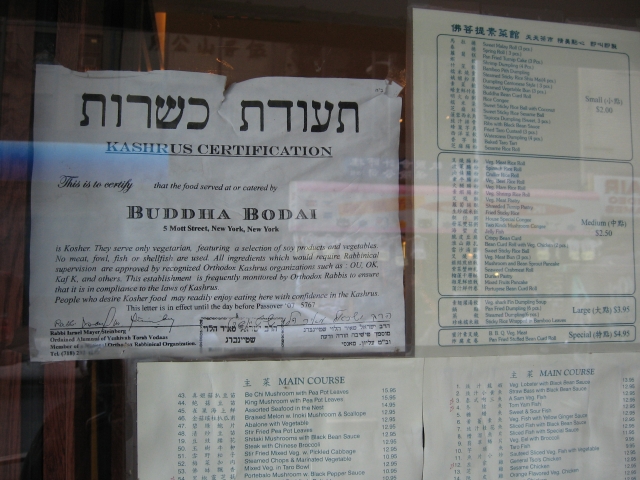
 "Three themes predominate. First, Chinese food is unkosher and therefore non-Jewish. But because of the specific ways that Chinese food is prepared and served, immigrant Jews and their children found Chinese food to be more attractive and less threatening than other non-Jewish or treyf food. Chinese food was what we term "safe treyf." Chinese restaurant food used some ingredients that were familiar to Eastern European Jews. Chinese cuisine also does not mix milk and meat; indeed it doesn't use dairy products at all. In addition, anti-Semitism, anti-Chinese racism, and the low position of the Chinese in American society also (perhaps paradoxically) made Jews feel safe and comfortable in Chinese restaurants."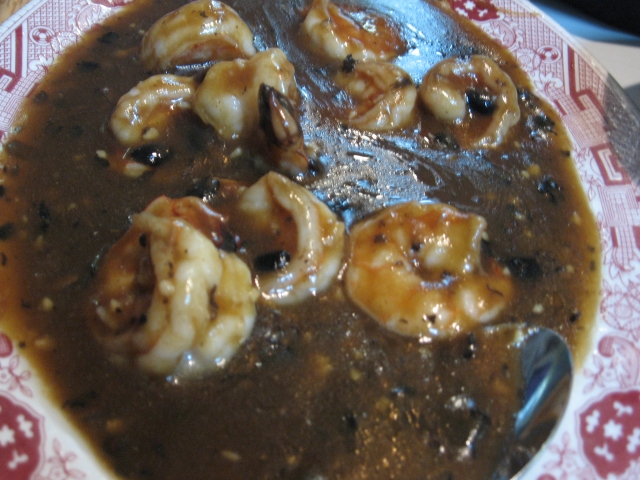

 Classic shrimp chow mein. This is a dish of purely American Chinese orgin, and almost nobody orders it anymore except my father. And the funny thing? It's actually quite good!
  Detective Jack Cohen trying out the old fashioned Police telephone box dispatcher at the former Precinct One. As a retired cop, my father was treated as a celebrity at the museum, with the knowledgeable museum curator giving us a guided tour and prying my father for details about the NYPD back in the "old days." I was pleasantly surprised - it's a great museum, and the special exhibit to NYPD men and women who perished in the World Trade Center is handled with great taste and loving care. Especially moving was the room dedicated to displaying the badges of all the NYPD officers who died in the line of duty. It was truly heartrending to see such a concrete symbol of how many of New York's Finest fell on September 11, 2001. Heartily recommended to anybody visiting the city, and especially to New Yorkers who may have missed it.

 Pete was a mild mannered banjo player and hospital administrator before discovering the the tsimbl. Subsequently he developed into one of the most thorough researchers of early traditional Jewish music, focusing on the role of the Jewish hammered dulcimer, known as tsimbl, and its many permutations in east Europe. Now he is Executive Director of New York's
 Above, from Pete's collection, is an old cimbalom, possibly a Jewish tsimbl from Galicia, of the type used until very recently around Rzeszów, Poland.
 A greek santouri tuned in the Hungarian manner. This instrument used to be Pete's main axe.
 Above, a contemporary Belorussian style tsymbaly made by
  Seen above is the runt of the litter, a Romanian tsambal mic produced by the
  Pete lives near a great Mexican restaurant,

 White Castles also follow the depression era practice of taking a miniscule bit of meat and doubling the bulk using onions, in this case, chopped onions soaked in water. The meat patties are stamped out with holes in them , and so the meat is "steam fried" on top of the onions. The result is a classically mushy, meaty wad that melts into the bun itself. In the photo below, the meat is being steamed while the buns warm on top of steamed onions. Anybody here against onions?
  New Yorkers vary widely in their opinion as to what makes White Castle so good, but many claim it is the cheapness of the meat - a combination of beef and , possibly, less appealing gut cuts - that makes the flavor so addictive and distinctive. I used to go to a White Castle in the Bronx when I was a kid, and the flavor has not changed at all. The packaging has modernized a bit, but White Castles are still owned by one family who refuse to expand their franchise, going against all modern rules of business expansion. That's why people will take road trips to fill up on sliders, and why every White Castle sells bulk boxes of frozen burgers to take home.
  I wouldn't have believed that White Castle could ever improve their burgers, but I tried the "Jalapeno Cheeseburger" at a whopping 74 cents. As you can see from the photo, I did not have just one. Founded in 1921, White Castle is the
 White Manna used to be my lunch of choice while I worked on a Hackensack Municipal garbage truck back in the 70's. Since the garbage crew started out at 5 am, lunch was usually around 9 am - so we never had to wait for burgers. White Manna make
  That orange block is sliced cheese, which gets slapped on the cheeseburgers at the last minute. Cheese like this cannot be found at fine cheese shops - you can only get it at Jersey burger stands, Army bases, and on some less affluent Indian reservations. While we were waiting a guy dressed in classic restaurant chef's uniform came in and ordered fifty cheeseburgers to go for his kitchen workers. "These are the best" he said, "I've been eating them since I was a kid." He then proceeded to speak in rapid-fire Dominican Spanish to all the grill cooks - it sounded like music to me. After years of living in Europe I still shudder when I have to wade through an earful of Iberian Spanish. Madrid Spanish sounds like people speaking Castillano after getting a mouth full of novocaine at the dentist office. Carribean Spanish, Mexican, Bolivian, Columbian - now that is Spanish that my ears can accept.
  You don't order "one burger" at White Mana. We went easy and ordered a modest two. With Fries. The fries are real fries - somebody in the back actually cutting potatoes, and soaking them in water to get the starch out so they fry crispy. No plastic pseudo-fries anywhere near the premises - you'll have to wait for your fries. And the burgers are heavenly - soft potato dough buns and loads of fried/steamed onions. Although burgers like these may be the ancestor of the modern fast food burger, they are anything but fast food.
 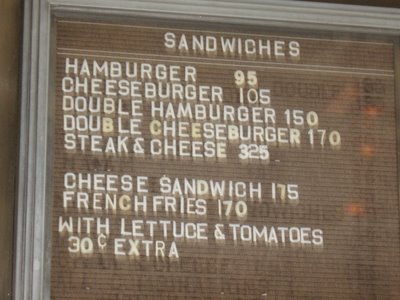 I have been having problems loading photos to the blog page over the last two days, so bear with me while I try and fix the problem. Brother Ron and I also visited the White Castle Hamburger joint in Fairview, New Jersey, but I can't get the pictures to load yet. Otherwise, much of my time is taken with meeting old friends in the New York Jewish music world, being overwhelmed when I walk into giant bookstores filled with books in English (I immediately go on the fritz trying to browse twenty years worth of reading into one hour) and trying to understand why things like