


 |
| Awesome! |
 |
| Awesome! |
 |
| Awesome! |
 |
| Awesome! |
 |
| Awesome! |
 |
| Awesome!! |
 |
| Slightly goofy, but awesome! |
 |
| Awesome! |
 |
| Awesome! |
 |
| Ça le fait grave! |
 |
| Awesome! |
 |
| Awesome! |
 |
| Awesome! |
 |
| Awesome! |
 |
| Awesome! |
 |
| Better than awesome! |
 |
| Traian Ardelean and Dorel Kordoban, Negreni, 2008 |
 |
| Fiddler from Balnaca |
 |
| Metalsmith Gypsy |
 |
| Young Gabors in pin stripes |
 |
| Gabor gypsy girl. |
 |
| Rudari: wood carvers |
 |
| The Valley of Cauldrons |
 Just as soon as I get inspired to update the blog with news of authentic Asian foods available in Budapest at the Four Tigers Chinese Market, along comes the Hungarian daily newspaper the Magyar Hirlap (once a truly great newspaper but since 2004 a shabby rag not worth wrapping fish with) with a story about how the eighth district Mayor and city council would like to shut the whole market down. For those of you who don’t read Hungarian, it seems that there was an altercation between two Arab guys attacking a Vietnamese stall keeper and his wife with swords a couple of weeks ago. (For some reason, all the weird crimes in Hungary tend to involve swords – usually of the decorative samurai variety. Mother-in-law murderers, angry truck drivers, drunken farmers, Arab money changers - all seem to have inexplicable access to a supply of samurai swords.) This altercation led to an investigative piece by the Hirlap reporters describing the market in hair-raising terms as a hotbed of crime, tax evasion, illegal weapon sales, customs transgressions, and all – around scary non-Hungarian badness. Needless to say the details in the article are shaky – the reporter claims that he encountered guys hawking fake tax receipts, brass knuckles, butterfly knives, and shock tazers as he entered the market. We have been going to the market two times a week for over ten years, and I have yet to be offered anything more than fake tax receipts, which have a far better market in tax-phobic Hungary than hand to hand weapons ever would. You don’t go to the Four Tigers Market for weapons. You go for rice noodles.
 The main reason I go to the market is to eat real, authentic Vietnamese and Chinese food, and to shop for Asian vegetables and groceries. Occasionally I buy some cheap blank DVDs, but mostly I purchase things involving rice noodles. And I am not the only one. My favorite Vietnamese spot is the Dang Muoi Bufe, located inside an ersatz Vietnamese grocery stall in the back of the Four Tigers Market (directly opposite Gate 3 – the “middle gate” of the Market. Pass the fornetti stand, the telephone sellers, and the little Chinese bufe by the entrance and march straight directly to the back end of the rows of stalls to the food shacks.) The Dang Muoi may not look like much – heck, it looks a lot less than much – but it takes my vote for the best restaurant in Budapest.
 The best Vietnamese for sure, but also the best soup, the best atmosphere, and definitely the best bargain of any eatery in town. You can argue with any of those points, perhaps rightfully so, and I simply don’t care. I like it. And so do Hungarian bloggers who have discovered it. The family who run this place have placed Xeroxed copies of Hungarian food blog reviews on the three picnic benches set up inside the tented grocery shack to advertise their fame in the Magyar food blog world. Almost every time we have been there this summer there has been a gaggle of curious Hungarian foodistas trying out the Vietnemese soups and slathering fish sauce over everything in sight. The Dang Muoi is all that is left of the row of Chinese and Vietnamese snack and soup shacks that once ran through this section of the market.
 There used to be the Chinese dumpling Lady and the hand pulled noodle shack, but now the area is completely Viet. The Chinese seem to have moved across the street to the wholesale market, leaving the Vietnamese (and in other section of the Market, the Turks) to feed the workers and shoppers who swarm here daily. The lunch shacks here are really not for the faint of heart – if you are obsessed with prissy concepts like neatness or table reservations do not bother making the trip. By some kind of quiet agreement, no restaurant inspectors ever seem to make the trip to the market shacks, and so it should stay. You are here for the pho - the Vietnamese noodle soup of the Immortals, the potage equivalent to the Vision on the Road to Damascus, the Alpha and Omega of Rice noodles and Sriracha sauce.
  I used to look for the stands that had Vietnamese signs lettered on cardboard scraps “pho” soup… but Dang Muoi Bufe (Büfé Đăng Mười) has a large poster illustrating all of the nearly twenty options on offer. Pho bo is the classic Vietnamese meal in a bowl, full of flat rice noodles, beef, coriander, and a tangy broth you can add to with chili sauce or vinegar and hot pepper sauce from jars on the tables. A big serving comes in a bowl that would sit nicely at the center of any Hungarian family’s Sunday lunch table, and probably holds more tender beef as well. There is no dainty way to eat pho. You can use forks and knives, you can try chopsticks, but basically the “attack and slurp” method works best. Vietnamese are famous in Asia for their sloppy chopstick technique so there is no reason for you to feel self conscious about the orange cloud of broth materializing around your head as you dig in. Rice noodles are not designed for easy eating. Try the bun bo hue if you want thin rice noodles in spicy beef broth – not for the rice noodle beginners.
 The rice plate (com phan) consists of a choice of about twelve options you point at and have loaded onto your plate: BBQ pork belly, fried sardines, curry chicken, tofu, marinated hardboiled eggs, fried spring rolls, Asian greens, pickled cabbage, salad… just point and hope for the best. But the real choice to make on the hot days of summer is bun cha – fresh barbecued pork slices served on a bed of cold rice noodles and salad with plenty of mint, basil and coriander, topped with crushed peanuts, accompanied by a side dish of a plastic bowl filled with tangy cold broth made from fish sauce, vinegar, sugar, and water.
 You wrestle a mess of noodles and meat onto your chopsticks and dip it into the sauce or you can take it easy and just dump a bunch of the noodles and shrubbery into the broth and alternate bites of cold brothy noodles with grilled meat. Bun nem is the same set up with crispy Vietnamese spring rolls – nem – instead of grilled pork, and happens to be my favorite.
 Pricing is usually around FT800 for a small plate or bowl (which is pretty large) and FT 1000 for a large serving (including the bun cha/nem sets.) Dang Muoi also offers a selection of Asian cold drinks, such as lotus nut drink, sickeningly sweet lemonade, and black bean drink.
 Black bean drink is one of those things I can never quite wrap my brain around, but everybody else likes it. Think of it as a cold, sweet black bean soup in a glass of ice. On a hot day, it is quite filling in itself. They also offer Vietnamese iced coffee – cà phê đá – which is a shot of super strong French espresso served with condensed sweetened milk AND sugar over ice. Personally, I prefer to wander over to the neighboring shack for my coffee, where the guy at the “deli” window offers the choice of “sweet or bitter” (edes vagy keseru.) Bitter means your iced coffee is only condensed milk sweet, not diabetes-inducing sugared sweet. Either way, it is the best iced coffee in a town where iced coffee still means a hot coffee with an ice cube tossed into it. If you do check out the Dang Muoi, remember that it is a small place serving a lot of people – take out within the market is a big part of their business – so don’t expect to stroll in and get a table for six easily. Its best to go just before the lunch rush or just after, but after 2 pm you run the risk of no more bun cha or much left on the steam table (so you go with pho.)
 The tables are picnic tables you share with everybody else while sitting beneath crates of ramen noodles and bags of rice. When you are done, you can even pick up all the Vietnamese ingredients you need to reproduce your meals at home – from fish sauce to coriander. We usually shop at the market stall next door. The guy two stalls down speaks English and his fish freezer sells the cheapest shrimp in Budapest and – if you can convince him to let you dip into his restaurant stocks – restaurant quality frozen squid, bigger than the small one-kilo squid you can usually find in Chinese groceries.And now the Magyar Hirlap wants to take all this away from me.
 And the Mayor of the eighth district (last famous for criminalizing homelessness in his district) chimed in saying the city council should close the entire market down and replace it with a “green belt” park featuring skate board ramps and basketball courts and… a lot less Chinese businesses. Making this stretch of Budapest into a green belt is a project only slightly less realistic than, say, terraforming Mars or cloning a triceratops. We’ve seen this all before. Hysterical news articles about the imminent demise of the Chinese market have been appearing for years, and yet they are still there, selling kitchen wares, slurping noodles, minding their own business while making sure the underpaid proletariat of the world can continue to clothe themselves in cheap underwear. I’m sure that an amicable solution will be worked out between the city and the management of the market in the traditionally accepted manner: over drinks and with big suitcases stuffed with cash pushed across a table. I’m not too worried that the market will be disappearing soon, but you never can tell when dealing with the eighth district. I may have to up my pho quotient this fall. Just in case.
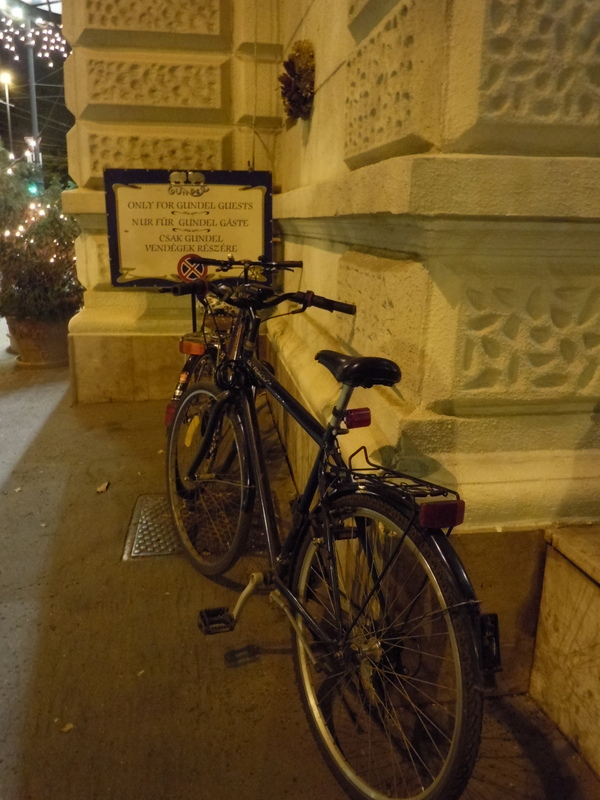 I had this bike - an old junker rebuilt by a bike messenger friend - for almost a decade and it was nearly indestructable. Perfect for Budapest's streets. It was so unspeakably ugly that I had actually seen bike thieves look at it and walk away. But bike theft is big business and Budapest is not immune. Most bikes are broken down and the parts shipped out to the third world where bikes are what the car is to the first world. Thieves strolled into the building yard and wire clippped through the cable lock that had worked for so many years. I will miss the Maschina, but it has finally been replaced by the hybrid trek bike of my dreams from Bikebase in Budapest.
 I can now cruise Budapest shifting gears to my heart’s content. And yes – Budapest has some funky corners that even locals know virtually nothing about. I have written about the sprawling Four Tigers Chinese Market years ago. It is a world unto itself, part souk, part suburb of Beijing, hardly regulated by any local Hungarian law, but nevertheless it is an orderly place following its own rules. It is where all of the small shop owners of East Europe go to buy cheap underwear, discount toys, bad fishing equipment, cheap DVDs, and odd plastic hair clips and where Fumie and I go to find decent cheap Chinese and Vietnamese food hidden within the alleys and warrens of the back rows. Usually we go to the Vietnamese vegetable markets where you can get the cheapest frozen shrimp (Big frozen shrimp) and squid in Budapest, alongside Asian greens, sauces, rice noodles, and fish sauce.
 The Dang Muoi Bufe and Asian market is here (I will deal at length with the Dang Muoi Bufe in a separate post. It serves Vietnamese food - a world class noodle cuisine all on its own right - and deserves some in depth attention.) which I have noted is the Best Restaurant in Budapest. Sure it may not lok like much, but the food is the best deal in town. Located inside a small Vietnamese food market, they serve some of the most authentic Vietnamese lunches in Europe on picnic tables located inside the shop. Friends (the Cluj/Kolozsvar posse again) pester me to take them there, and nobody goes home unimpressed. They make not only the classic Vietnamese Soup of The Heavens Pho (Pho bo, beef, and pho ga chicken) but about a dozen other great Viet meals in a bowl of broth as well, like the excellent spicy bún bò Huế.
 If you are from Budapest, however, go find it yourself. (Back of the retail side of the market from the middle entrance, called gate 3 – across Kobanyai ut) The Four Tigers Market is merely the retail face of a whole world of Chinese business activity. On the other side of Kobanyai ut are a series of huge, dilapidated old warehouses and factories that have gradually been transformed into business centers called things like “Asia Center” or “Europa Center.” Set aside for large scale wholesale distribution, these shops are rarely visited by people strolling for bargains – they don’t sell single items. Trucks and vans with lisence plates from Romania, Poland, and Serbia load up on goods as porters wheel around on odd looking Chinese motorcycle trucks.
 But if you go into the back nobody stops you from browsing. Hell, nobody even notices you. Which is good, because signs at the entrances – manned by beefy Hungarian “secuity” guards with tattoos and shaved heads – expressly forbid photography, and if you are lucky a shop keeper may warn you about the rule before the security goons confiscate your camera. Of course, we have been coming here for years so we are experts at surreptitious photography. The best way to cruise around this teeming urban market landscape in seeming invisibility is simply to ride a bicycle through it.
 It is, basically, an industrial suburb of some Chinese city, so everybody gets around on bikes. Some parts of the market are fashioned into malls, some parts look like Turkish shopping centers, and bikes are parked everywhere. You can, literally, ride your bike through the malls. Everybody does, and nobody seems to be bothered by it. Different rules apply here. The streets back here are named “Shanghai ut” and “Wenzhou ut” and “Kinai ut.” As if you need to be reminded. We were here cruising for lunch, and we found it hidden among the kolbasz stands and trucks serving regional fried bread things from China.
 When we were here a few weeks ago exploring with my old friend Rick and his wife, Xioarong (who is a sophisticated Szechuan woman) we came across a small lunch place advertising itself in Chinese as “Lunch. Shan.” Xiaorong poked her head in the doorway and asked the family there what kind of food they served. "Food from Shan county in Fujien province."
 If you ever ate around East Broadway in Manhatten's Chinatown - noodle soups and spicy fish at rock bottom prices - you will understand our addiction to Fujienese cuisine. But here? In the Budapest wholesale market? It was a bit early, and we had already eaten our breakfast soup at the Dang Muoi across the street, so we took note of the place and made a mental promise to return. A couple of tables, a cash register, and a family making dumplings. What more could you ask for? This time Fumie and I went straight for it (address: K-8. Apparently, the buildings are named K, D, B, etc. Live and learn, right?)
 We walked in, checked out the menu. Noodles. Soups. Dumplings. Nobody spoke much Hungarian or English. Excellent! The partons took no notice of us at all and all chatted in Chinese. the market is full of wei lo folks from Hungary and Romania, porters and workers and buyers who have picked up a taste for Chinese lunch - and even some who have learned to speak Chinese as well. Fumie pointed at the steam dish full of dumplings and expertly miscommunicated enough to get a dozen for FT 800. I simply said “Give me something good” And presto!
 Out comes a bowl of some of the best Chinese noodle soup with pork ribs and vegetables this side of the Danube. This is a real winner - a deep delicious broth with real Chinese noodles, not the spaghetti some places use as a substitute. Sometimes there is nothing that beats a good Chinese noodle soup. I grew up with them as the cheapest good meal you could get in New York. The lack of chinese noodle soups used to be one of my biggest complaints about living in Budapest, but with a bit of faith, perseverance, and the world's fastest growing economy, Chinese noodles have come to me.
 And dumplings. these were hand made, filled with meat that may have come from some kind of animal and oddly, carrots. Served with soy sauce and vinegar. They made Tokyo born Fumie happy, as did half of my soup. If Budapest ever gets a decent Japanese ramen noodle shop, these soup stands in the market may get a run for their money, but until then, they are safe. Now when the weather gets a bit colder and we need something more substantial, there are the traditional hand pulled Langzhou noodles you can find in another Chinese soup joint in a different part of the wholesale side of the street market.
 This is an unnammed hole in the wall lunch spot with one table located in a warehouse across the street from the main gate of the Four Tigers Market. This little unmarked hole in the wall is run by folks who really don't care about anything except perfect noodles - atmosphere? Service? Nope. Just noodles. Tell me: is this not the most evocative bistro in all of Budapest? No? Well, they may well serve the best soup in town.
 Service with a smile? Who needs all that extra stuff. They stretch the noodles by hand. If you want them, you will sit at a cramped picnic bench beneath a warehouse of cardboard crates and enjoy it anyway. To find it go to the doorway below the sign that says "Kapu" (gate) behind the sign that says "CHANGE" next to the Rong Rong market vegetable market, which is now just a guy hawking bitter melons and bok choy from boxes on the street. Its on your left about 25 meters before you get to the Hungarian sandwich/lunch stand where all the Romanian Gypsies and Syrian moneychangers hang out. Bon Appetit!
